
LinkedIn’s 2026 Feed Changes: Why Clear, Human Content Matters More Than Ever
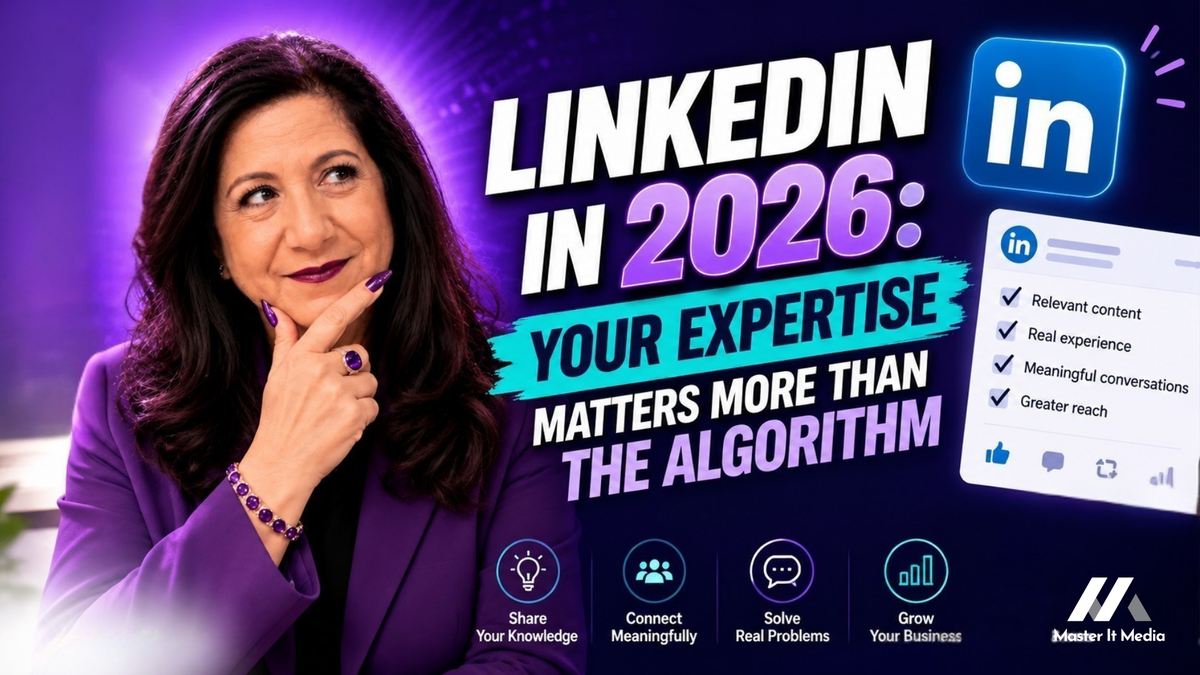
You post something on LinkedIn that you think is really good.
You check back later and find very few impressions, hardly any engagement, and maybe a couple of likes from people who already know you.
It's tempting to immediately blame the posting time, the format, or some mysterious change to the algorithm.
But LinkedIn made some significant changes to its Feed in 2026, and I think they point to a much more useful question:
Does LinkedIn, and more importantly, your reader, understand what your content is actually about?
In March 2026, LinkedIn announced a new Feed ranking system that uses large language models and what it calls Generative Recommenders. The goal is to better understand what posts are actually about and how each member's professional interests evolve over time. LinkedIn also announced efforts to reduce repetitive, low-substance content, engagement bait, automated comments, and other attempts to manufacture engagement.

So what does all of that mean for you as a business owner?
I think it comes down to five things.
1. Get Clear About What You're Talking About
For years, we've talked about social media algorithms as though they're primarily counting engagement.
How many people liked the post? How many commented? How quickly did people respond?
Those signals still play a role, but LinkedIn says its newer Feed systems are designed to better understand the actual meaning of a post and how it relates to a member's professional interests.
That makes clarity even more important.
Let's say you're a business coach and you post:
“Here are three ways to grow your business.”
There's nothing technically wrong with that. But what kind of business are you talking about? Who are you trying to help? What problem are you solving? Why should someone stop and read your advice?
Now compare it with:
“Why service-based business owners struggle to turn networking conversations into actual sales conversations.”
Suddenly, I know who you're talking to and what problem you're addressing. I have a reason to keep reading.
This doesn't mean stuffing your posts with keywords. LinkedIn's newer system is designed to understand meaning and context, not simply look for a particular word.
So write clearly.
Use the language your customers use. Talk about specific problems. Share what you've learned from solving them.
Don't make LinkedIn guess what you're talking about. More importantly, don't make your reader guess.
2. Make Your Profile and Your Content Tell the Same Story
Your LinkedIn profile isn't separate from your content strategy.
LinkedIn says its Feed system considers professional information members choose to share, including industry, experience, skills, and geography. It combines those signals with how people interact with content over time to determine what may be relevant to them.
That's one more reason your profile should clearly communicate who you are professionally.
If your profile says one thing and your content regularly talks about ten unrelated subjects, you're not giving people a particularly clear picture of what you want to be known for.
I'm not suggesting that you cram the same keyword into every section of your profile.
I'm talking about consistency.
Ask yourself:
If someone looked at my LinkedIn profile and my last 10 posts, would they understand what I know, what I do, and who I help?
If the answer is no, you have some work to do.
There's another reason this matters. LinkedIn says its recommendation system can surface relevant content from professionals you haven't connected with yet.
Your next post may introduce you to someone who knows absolutely nothing about you.
Give that person enough context to understand why your post matters.
3. Give AI Your Expertise Instead of Asking It to Invent It
LinkedIn has also been very clear about generic AI-generated content.
In 2026, LinkedIn addressed the increase in what it called “AI slop,” meaning low-effort AI-generated content that may sound polished but lacks a unique perspective or substance.
And I want to make an important distinction here.

LinkedIn is not telling you that you can't use AI to help you write.
In fact, LinkedIn specifically says AI can be useful for refining language. The problem is content that doesn't represent your voice, perspective, or expertise. LinkedIn reported that its systems were correctly identifying generic content 94% of the time in its initial testing.
This reinforces something I've been teaching for a long time:
AI should support your voice, not replace it.
If you open an AI tool and type:
“Write a LinkedIn post about the importance of networking.”
You'll probably get a perfectly acceptable post.
And that's the problem.
It will probably be perfectly acceptable and completely forgettable.
Give AI something better to work with.
Maybe you attended a networking event and noticed everyone racing around trying to meet as many people as possible, but your best conversation was with the one person you spoke with for 15 minutes.
Now you have something useful.
You have an experience, an observation, an opinion, and a lesson.
That's what you give AI.
Let the tool help you organize your thoughts, tighten the writing, or find a clearer way to explain your point.
Don't ask it to manufacture your expertise for you.
4. Remember That Your Experience Is the Part Nobody Else Has
AI has access to an enormous amount of information.
But it wasn't sitting in your office last Tuesday when a customer asked you a question that completely changed the way you explain your service.
It didn't make the mistake you made 10 years ago. It didn't have the client conversation that made you rethink something you had believed for years. And it doesn't know why you disagree with a common piece of advice in your industry.
You do.
That's your content.
Your experience, perspective, stories, opinions, mistakes, and lessons are what make your content different from something anyone could generate from a generic prompt.
And that's particularly relevant when LinkedIn says it's working to reduce repetitive, low-substance content while making more room for useful professional perspectives.
Before you publish your next post, ask yourself:
“What am I adding here that couldn't have come from just anyone?”
Maybe it's a firsthand experience. Maybe it's a question customers ask you constantly. Maybe it's a lesson you learned after 20 years in your profession.
Build the post around that.
5. Invite Conversation Instead of Fishing for Engagement
LinkedIn is also taking action against automated comments, engagement pods, and other attempts to manufacture activity. It says it's reducing engagement bait and repetitive, low-substance posts in the Feed.
That means I would be careful with posts designed primarily to generate a comment rather than start a conversation.
You've probably seen things like:
“Comment YES if you agree!”
There's a difference between asking a thoughtful question because you genuinely want to know what your audience thinks and asking for a comment simply because you're trying to trigger engagement.
Questions can still be fantastic.

Ask people about their experiences. Invite another perspective. Start a useful discussion.
Invite people into the conversation. Don't fish for engagement.
That's better for the kind of content LinkedIn says it wants to surface, but I also think it's better for your business.
A hundred meaningless comments aren't nearly as useful as a real conversation with the right person.
What Should You Do With All of This?
You don't need to become obsessed with every technical detail of LinkedIn's algorithm.
And you certainly don't need to chase every new trick someone claims will “beat” it.
Instead, look at your LinkedIn presence as a whole.
Start with your profile. Does it clearly explain what you do, what you know, and who you help?
Then look at your content. Are you consistently talking about subjects connected to your expertise? Are you sharing experiences, opinions, stories, and lessons that actually came from you?
Look at how you're using AI, too. Is it helping you communicate your ideas more efficiently, or are you asking it to create the ideas and opinions for you?
And finally, look at the conversations you're creating. Are you inviting genuine responses or simply trying to get another comment?
Those questions are much more useful than chasing the latest algorithm hack.
The Biggest LinkedIn Shift Isn't Really About the Algorithm
What I find interesting about LinkedIn's changes is that the practical advice isn't particularly complicated.
Be useful, be specific, talk about what you know, share what you've experienced, and give people a reason to remember you.
LinkedIn's 2026 Feed changes are designed to better understand context and professional interests while reducing generic and inauthentic content.
For business owners who actually have experience and expertise to share, there's a real opportunity in that.
You don't have to sound like everyone else.
Your experience is an advantage. Your perspective is an advantage. Your expertise is an advantage. Your personality is an advantage.
Use AI to make creating content easier.
But make sure the person your audience ultimately gets to know is still you.
Is Your LinkedIn Profile Telling the Right Story?
Your content can be excellent, but when someone clicks through to your profile, they should quickly understand who you are, what you do, and why they should keep paying attention.
If it's been a while since you updated your profile, take another look at your photo, background image, headline, About section, experience, and the overall story they tell.
If you want some help, I've created a LinkedIn Profile Optimization Guidebook with a companion video and screenshots to walk you through the process.
 Visit LinkedInGuideBook.com to get started.
Related Resources
For a deeper dive into solution-focused content:
Ready to master your media?
Let's make your social media simple, consistent, and worth it. Book a free strategy call.
Book a free strategy call →