
All Posts LinkedIn’s 2025 Algorithm Update Explained (and What to Do Now)
Have your LinkedIn posts suddenly stopped getting the engagement they used to?
You're not imagining it.
LinkedIn has quietly rebuilt its algorithm from the ground up, and the changes are bigger than most people realize.
This update isn't about finding the perfect posting time or using the right hashtags anymore. It's about how clearly LinkedIn understands your expertise, your audience, and the value you bring.
The good news?
This shift actually benefits business owners who focus on providing genuine value.
Let's break down what's changing and how you can work with LinkedIn's new system instead of fighting against it.
Meet 360 Brew: LinkedIn's New AI Engine
At the center of LinkedIn's update is something called 360 Brew, the platform's new AI foundation model.
Without getting too technical, think of it as the brain that now powers LinkedIn's recommendations, content distribution, networking suggestions, and much more.
Previously, LinkedIn relied on multiple smaller algorithms that handled different parts of the platform separately.
Now, one powerful AI system evaluates everything together.
Your:
- Posts
- Comments
- Profile
- Connections
- Engagement patterns
All contribute to how LinkedIn understands your professional expertise.
Why This Matters for Your Business
The biggest change is simple:
Your profile and your content are now more connected than ever.
In the past, you could post about one topic while your profile focused on something completely different.
Now, LinkedIn is looking for alignment.
If your profile says one thing but your content says another, the algorithm may struggle to understand who should see your posts.
The result?
Reduced visibility and lower engagement.
How LinkedIn Is Evaluating Content Differently
The new system goes beyond keywords and hashtags.
It analyzes content semantically, meaning it looks at the actual meaning behind your words.
LinkedIn is asking questions like:
- What expertise does this person demonstrate?
- Is this content helpful?
- Does this content align with their professional profile?
- Is this likely to be valuable to a specific audience?
This means clarity matters more than cleverness.
Your audience needs to understand what you do, and so does LinkedIn.

Why Some Posts Are Suddenly Performing Better
Many users have noticed dramatic shifts in reach.
Some posts take off.
Others seem to disappear.
One reason is that LinkedIn now places greater emphasis on:
- Profile alignment
- Content quality
- Opening sentences
- Audience relevance
- Consistent expertise
The platform is prioritizing thoughtful insights over trend-chasing.
That is good news for professionals who share useful, experience-based content.
How to Adapt to LinkedIn's New Algorithm
The goal is not to outsmart the algorithm.
The goal is to help it understand you.
Here are four ways to do that.
1. Audit Your Profile
Your headline and About section should clearly communicate:
- Who you help
- What you help them achieve
- How you do it
Instead of vague titles, focus on clarity.
For example:
HR Consultant Helping Small Businesses Build Strong Teams
is much clearer than:
People-First Leadership Expert
The clearer your positioning, the easier it is for LinkedIn to connect your content to the right audience.
2. Warm Up Before You Post
Before publishing, spend a few minutes engaging with content in your niche.
Leave thoughtful comments.
Contribute to conversations.
This helps LinkedIn better understand your expertise and your network.
Think of it as giving the algorithm additional context about who you are.
3. Write for Clarity
Your first two sentences matter more than ever.
Start with a clear benefit, insight, or observation.
Instead of:
"Here's a thought I had this morning..."
Try:
"Most businesses post on LinkedIn regularly, but few understand why some posts convert and others don't."
Lead with value.
4. Focus on Evergreen Topics
LinkedIn's AI now evaluates content performance over longer periods.
Helpful content can continue gaining visibility for weeks.
Instead of chasing every trend, create content around topics your audience will care about next month and next year.
Evergreen content often delivers better long-term results.
LinkedIn Do's: What Helps Your Reach
Align Your Expertise
Make sure your profile reflects the topics you consistently discuss.
Share Real Experiences
Stories, lessons learned, and client insights demonstrate credibility.
Tag Thoughtfully
Only tag people when they are genuinely part of the conversation.
Engage Meaningfully
Leave comments that contribute value, not just quick reactions.
Use Emotion Carefully
Authentic reflections often perform well.
Overly dramatic or exaggerated content typically does not.
LinkedIn Don'ts: What Can Hurt Your Reach
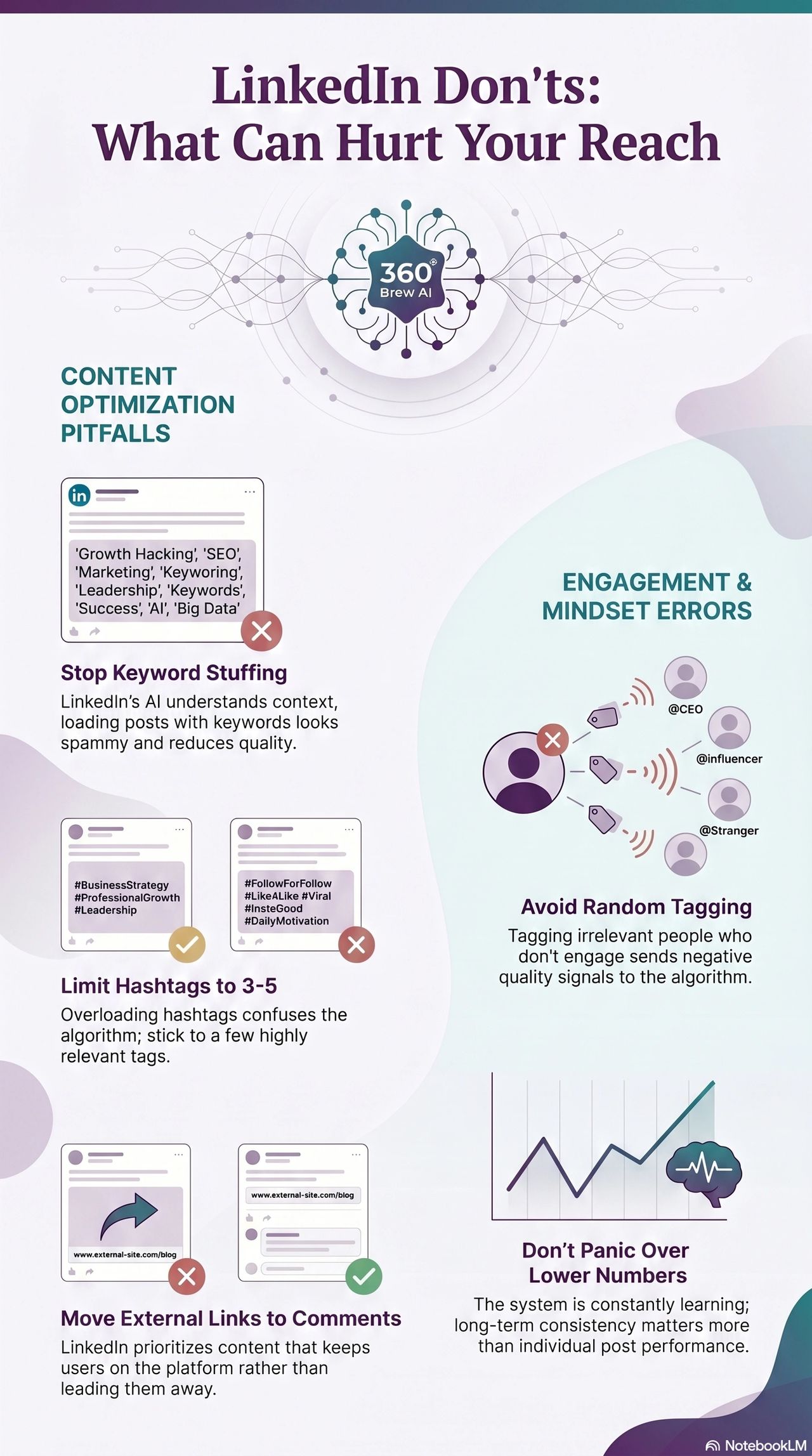
Don't Keyword Stuff
The AI understands context now.
Loading your post with keywords makes it look spammy.
Don't Tag Random People
Irrelevant tags can reduce content quality signals.
Don't Overload Hashtags
Stick with three to five relevant hashtags.
Don't Lead With External Links
LinkedIn prefers content that keeps users on the platform.
If needed, place links in the comments.
Don't Panic Over Lower Numbers
The system is continuously learning and refining audience matching.
Consistency matters more than individual post performance.
The Most Important Shift
LinkedIn is becoming less of a distribution platform and more of a credibility platform.
The algorithm is no longer asking:
"How many people can we show this to?"
It is asking:
"Who would benefit most from seeing this?"
That is a major shift.
And it rewards creators who focus on helping rather than simply posting.
A Simple LinkedIn Audit Shortcut
Want a quick way to evaluate your profile?
Download your LinkedIn profile as a PDF.
Then upload it into your favorite AI tool and ask:
Analyze my LinkedIn profile based on LinkedIn's current AI-driven algorithm. Identify areas where my profile positioning, expertise, content alignment, and audience targeting could be improved.
The feedback can be surprisingly helpful.
Final Thoughts
LinkedIn's new algorithm isn't trying to make content creation harder.
It's trying to better understand expertise.
The creators and business owners who succeed will be the ones who focus on:
- Clear positioning
- Consistent messaging
- Helpful content
- Genuine engagement
Because when your profile, content, and expertise align, LinkedIn has a much easier time putting you in front of the right audience.
And that is where meaningful visibility begins.
Related Resources
For a deeper dive into solution-focused content:
- Podcast Episode: LinkedIn’s 2025 Algorithm Update Explained (and What to Do Now)
- YouTube Version: Watch the episode
Share this post:
Ready to master your media?
Let's make your social media simple, consistent, and worth it. Book a free strategy call.
Book a free strategy call →